


{{goods.model}}
Spire 1325 or 2130 : Which ATC CNC router is right for your shop?
Most customers tend to compare spec sheets when choosing an ATC engraving machine. But when you put the 1325-RSP-T and 2130-RSP-T side by side, the differences aren't obvious—same tool magazine capacity, same spindle specs, same guide rail precision. At that point, flipping through spec sheets won't tell you which one actually fits your shop.
The real question isn't on paper. It's more like: Is the 4×8-foot table of the 1325 enough for daily work? Or is the 7×10-foot table of the 2130 overkill—too much machine, too much money? Get the table size wrong, and it hits you where it hurts: daily output and long-term ROI.
This article skips the spec-sheet trap. Instead, we start with real production pain points—order mix, throughput, workshop space—and walk you through a clear decision framework. No guesswork, no regrets.
Ⅰ.Two ATC CNC Routers, Two Production Roles—1325 or 2130?
Spire 1325-RSP-T
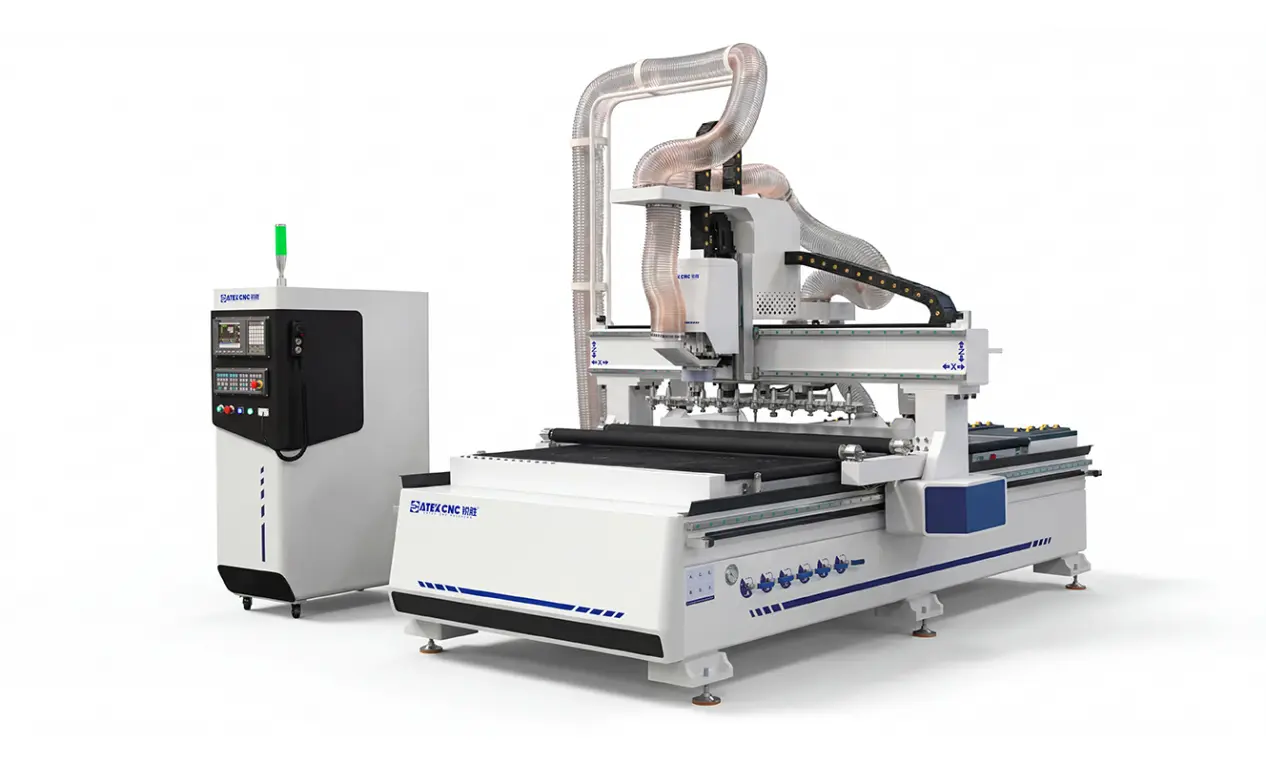
In custom cabinetry and panel furniture production, 1220×2440mm standard sheets make up the bulk of most shops' daily material intake. Yet many manufacturers struggle with low efficiency, frequent defects, and recurring machine issues—often tracing back to one root cause: poor equipment compatibility. The Spire 1325-RSP-T is built specifically for 1220×2440mm standard sheet processing, delivering reliable, high-performance production right where it's needed most.
- Heavy-Duty Frame Construction
The machine frame is built from thick-section, high-strength square tubing with multiple internal reinforcement structures. Compared to standard ATC CNC routers, the total machine weight is increased by over 60%, and with the addition of thickened steel plates across the frame, overall rigidity is tripled. The frame also undergoes multiple rounds of high-temperature annealing and vibration stress-relief treatment, which thoroughly eliminates internal stresses and prevents welding deformation over years of heavy use.
- Automatic Tool Change Spindle
Equipped with a 9kW air-cooled automatic tool change spindle featuring direct-drive motor design, which delivers 100% power transmission with zero loss. Compared to conventional spindles, operating noise is reduced by 20%, creating a quieter workshop environment while maintaining strong, stable performance. Maximum spindle speed reaches 24,000 RPM with runout ≤0.005mm. This exceptional precision not only significantly reduces tool wear and extends tool life, but also improves surface finish—cutting and milling operations produce panels with over 40% lower surface roughness, requiring no secondary sanding.
- Automatic Tool Change System
Features a pneumatic automatic tool change system with a cycle time of less than 1 second—over 90% more efficient than traditional manual tool changes. The system accommodates tools up to 20mm in diameter and is compatible with over 95% of standard woodworking tools on the market. Whether for nesting, grooving, drilling, 3D carving, or contour edge profiling, tool changes happen automatically with no operator intervention.
- Dual Vacuum & Pressure Workholding
Unstable panel holding causes scrap—plain and simple. The 6-zone, 24-port vacuum table secures panels without clamps, with zone activation matched to panel size to save energy. Add the auto-lifting twin-rod pneumatic pressure roller, and workholding reliability jumps 50%—no chatter, no edge chipping, no shifting during cutting.
- 4+2 Positioning Cylinders
Manual positioning eats time and invites errors. The 4+2 precision positioning cylinders cut setup time by over 40%—faster loading, less downtime. For double-sided machining, the system holds alignment even after flipping, so holes line up perfectly every time.
For workshops running standard sheet production day in and day out, the Spire 1325-RSP-T is built for exactly that: high-volume standard panel processing, with fewer headaches and fewer rejects.
2. Spire 2130-RSP-T
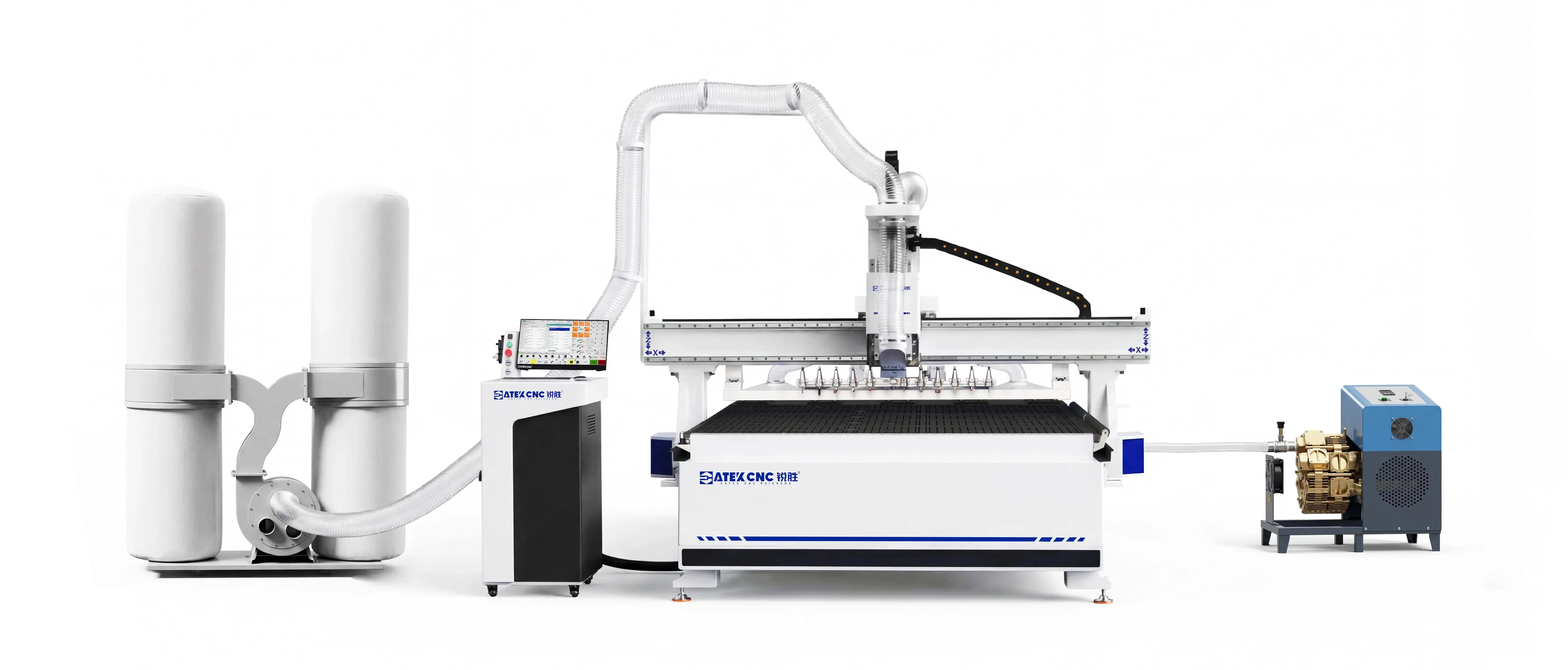
Many panel furniture manufacturers encounter a hard bottleneck: standard 1325-class machines are limited to standard-sized sheets. When oversized or irregularly shaped panels come in, they simply can't handle them. The Spire 2130-RSP-T changes that equation entirely. Built specifically for full-size panel processing, its breakthrough advantage lies in removing dimensional constraints altogether. One machine accommodates panels up to 2100×3000mm—from standard 1220×2400mm sheets to heavy oversized panels or irregular shapes, all with effortless loading. Combined with a high-precision positioning system, it maintains machining accuracy across the entire working area, delivering consistent results even on large-scale cuts.
- Multi-Process Integrated Full-Automation Processing
Equipped with an HQD 9kW air-cooled ATC spindle and a 12-station linear tool magazine, the machine delivers ample tool capacity and stable changes, easily handling all panel processing operations—cutting, drilling, grooving, contour milling, and 3D carving. Paired with the Taiwan LNC control system, tool change speed is optimized, with automatic tool measurement and error compensation performed after every change—no operator intervention required. This effectively eliminates the long changeover times and alignment errors associated with manual tool changes.
- Heavy-Duty Reinforced Frame Construction
The Spire 2130 ATC features a heavy-duty reinforced dual-layer bed structure. The frame is built with 250×150mm heavy-duty support legs and 200×150mm reinforced cross braces, providing comprehensive structural reinforcement. The worktable employs a double-layer ring-beam design with thickened steel plates on the surface. This dual-layer reinforcement doubles the frame's resistance to deformation and load-bearing capacity compared to single-layer designs, maintaining long-term table flatness. The machine grows more stable with use, with no degradation in accuracy over time.
- Smart Loading & Precision Positioning
The machine is equipped with 4 coordinated feed assemblies, complemented by 30 auxiliary infeed rollers at the tail and non-slip rubber rollers on the sides, significantly reducing loading resistance. This allows a single operator to easily handle smooth loading of oversized panels—saving time and effort. The positioning system features an upgraded 4+3+4 multi-cylinder layout, eliminating the need for repeated manual calibration and enabling fast, precise panel alignment. Whether processing a single large panel or batch-loading multiple smaller sheets simultaneously, the system maintains exceptionally high repeat positioning accuracy.
The 2130-RSP-T handles the full spectrum of panel sizes on a single machine. Fully automated operation boosts production efficiency while delivering consistent machining quality—reducing costs, improving results, and supporting your long-term business growth.
Self-Diagnosis Before Selection: Three Typical Production Scenarios
The right machine isn't about having the highest specs—it's about matching your actual production needs. Before you dive into the spec sheet, take a close look at your own workflow.
| Production Mode | Key Characteristics | 1325 Suitability | 2130 Suitability | Recommendation |
|---|---|---|---|---|
| Standard Sheets, Single-Piece Processing | Orders primarily 4×8 ft standard panels; single-sheet loading and processing; small to medium batch sizes | Precise match; specs fully adequate | Usable but table utilization rate is lower | 1325-RSP-T |
| Batch Production, Multi-Tool Simultaneous Processing | High order volume; complex, multi-step processes | Limited tool capacity; insufficient for complex multi-process jobs | Ample tool capacity; efficient multi-process complex machining | 2130-RSP-T |
| Oversized or Irregular Panels | Panels frequently exceed 4×8 ft; non-standard dimensions | Won't fit; requires pre-cutting | Direct loading; no pre-cutting needed | 2130-RSP-T |
Ⅲ. What Else Matters When Choosing an ATC CNC Router?
Beyond table size and specs, three more factors will shape your final decision.
1. Order Mix
If your orders are mostly 4×8 standard sheets—whether small custom jobs or medium runs—the 1325-RSP-T fits like a glove. It's built for exactly that workflow, plain and simple.
If your order book is more varied—standard panels one day, oversized or odd-shaped sheets the next—the 2130-RSP-T is the better bet. It handles the full range, and even lets you batch-process multiple standard sheets at once. For shops eyeing the growing whole-home custom market, it's a machine that grows with you—no second investment, no upgrade headaches later.
2. Labor Efficiency & Operator Workflow
The 1325-RSP-T features a compact table that makes panel loading and unloading manageable for a single operator throughout the entire process. Simple to operate with low labor dependence, it's an ideal fit for small teams—helping you minimize staffing costs without sacrificing productivity.
The 2130-RSP-T handles oversized panels and multi-sheet batch processing, but the material weight per cycle is significantly greater. Single-operator loading can be time-consuming and physically demanding. If your shop has adequate staffing, we recommend two-person operation or adding auxiliary loading/unloading equipment to keep the workflow smooth and fully leverage the machine's capacity.
3. Initial Investment vs. Long-Term Return
The 1325-RSP-T requires a lower initial investment, with purchase, transportation, maintenance, and energy costs all more manageable. For standard-panel custom orders and small-to-medium batch production, it delivers stable output from day one with a short payback period—a practical, low-risk choice.
The 2130-RSP-T comes with a slightly higher upfront cost, but its core advantages—full-size panel processing and multi-sheet simultaneous batch production—deliver returns that smaller machines simply can't match. It handles standard jobs with ease while unlocking high-value oversized and custom panel orders. Batch output capacity is significantly higher, and over time, the investment pays off more handsomely. For scaled-up shops with strong order flow and clear growth plans, the 2130 is the better long-term bet.
Ⅳ. How to Choose the Right ATC CNC Router for Your Shop?
Step 1: Define Your Panel Sizes
The primary panel dimensions your shop processes daily are the first and most critical criterion for selecting an ATC CNC wood carving machine—they determine whether the equipment is fundamentally suitable for your workflow.
- If your panel sizes are consistently within 4×8 feet, with no plans for oversized orders or business expansion in that direction, the 1325-RSP-T is more than sufficient. The table size matches your material precisely, keeping the process straightforward with zero waste—perfectly aligned with standard custom cabinetry work.
- If your panels frequently exceed 4×8 feet, or you're planning to take on oversized orders, the 1325's standard table becomes a hard limit—panels won't fit without pre-cutting. In this scenario, the 2130-RSP-T's larger table isn't just an upgrade; it's a necessity. Its oversized table covers the vast majority of non-standard panels, enabling full-sheet, single-pass processing with complete integrity and consistent accuracy. And when you're running standard 4×8 sheets, the extra table space makes loading, aligning, and offloading noticeably easier—so it's not just for big panels, it's more comfortable for everyday work too.
Step 2: Assess Your Throughput Requirements
Table size determines whether your material fits. Machine configuration determines how stable your cuts are. But the real measure of CNC router productivity isn't higher specs equaling faster output—it's how well the machine matches your specific workflow. Better fit, better efficiency.
- If your shop primarily processes standard panels in a single-sheet, one-at-a-time workflow, the 1325-RSP-T—with its 6-zone vacuum table and 4+2 positioning cylinders—delivers more than enough clamping stability and machining precision. Its quicker start-stop response and better adaptability for small parts and irregular shapes mean zero wasted capacity. It's a perfect match for fine, single-sheet production.
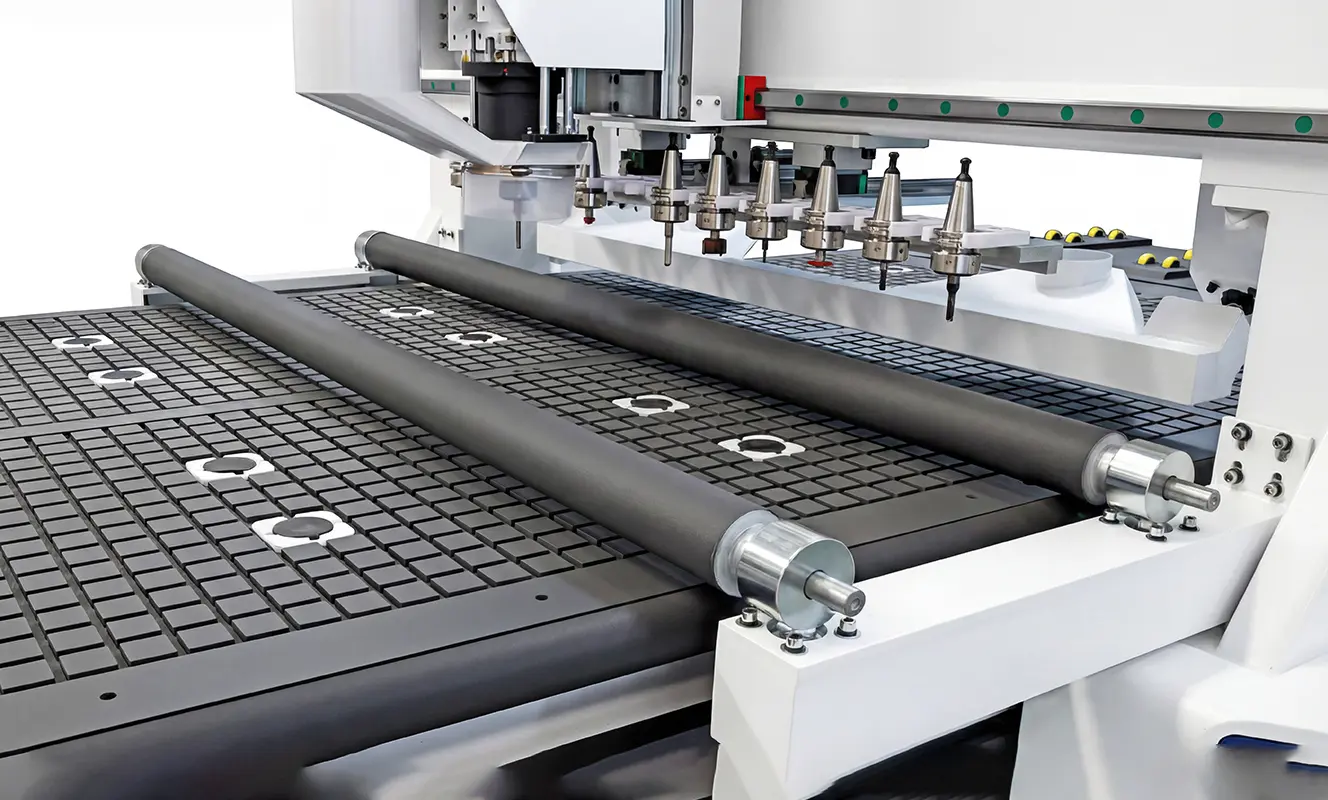
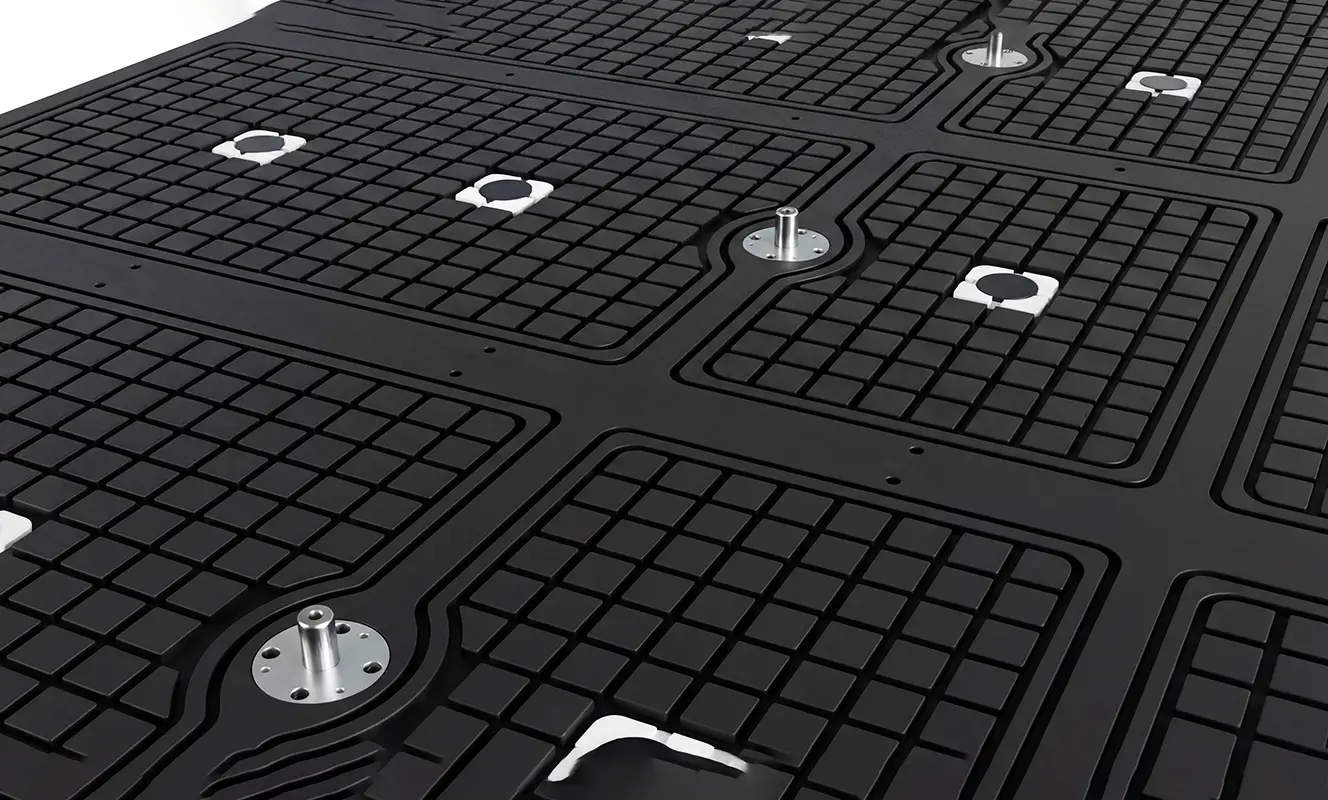
- For shops with high-volume batch orders that require multiple tools for complex processing, the 2130-RSP-T's advantage becomes clear—its automatic tool change system enables continuous multi-tool, multi-process machining, significantly boosting throughput. For businesses whose core work revolves around oversized and full-size panels, the 2130's dedicated 15-zone vacuum table and 4+3+4 positioning cylinders are essential, ensuring uniform holding force and precise alignment across large workpieces. These aren't optional upgrades; they're necessary configurations for stable, reliable oversized panel processing. Whether you're batch-processing multiple standard sheets or heavy full-size panels, the system maintains consistent vacuum pressure and accurate positioning—so every part comes out uniform with minimal defects.
Step 3: Factor in Future Order Trends
One factor that's easy to overlook during selection is the possibility of future order changes. Many CNC router equipment purchases become inadequate within two years—not because of quality issues, but because the selection was based solely on current needs without anticipating industry shifts. While a 4×8-foot table may meet today's production requirements, the trend in custom cabinetry is unmistakable: minimalist full-panel designs, oversized integrated cabinets, and seamless whole-room solutions are gaining momentum, with customer demand for large-format panels growing year by year.
A 4×8-foot table handles most standard sheet processing today, but it presents real limitations in the following scenarios:
- Orders include non-standard panels exceeding 4×8 feet
- Growing demand for larger sheet sizes driven by custom cabinetry trends
- Batch orders require processing multiple standard sheets simultaneously
If your shop consistently handles small panels, custom one-offs, and individual orders with no plans for expansion or oversized panel work, the 1325 is more than sufficient—reliable, profitable, and cost-effective.
However, if future expansion is on the horizon—whether that means taking on premium full-panel orders, scaling up batch capacity, or diversifying your order mix—the smaller table of a standard CNC router becomes a clear bottleneck. The 2130-RSP-T's larger table isn't just about size; it's about giving your shop room to grow. You can still run standard sheets daily, but when oversized panels, non-standard sizes, or multi-sheet batches come in, the table size won't hold you back—from either production capacity or order opportunities.
Ⅴ. FAQ
Q1: I'm currently running all 4×8 standard panels, but I'm thinking about gradually taking on oversized orders. Should I go straight for the 2130, or start with the 1325?
If oversized orders are expected to account for more than 30% of your workload within the next year, we recommend going straight to the 2130. It handles full-size panels across the board and performs just as well on standard sheets—no compromise in daily operation.
Q2: The 2130's table is so large—will it actually be less convenient for everyday standard sheet processing?
Not at all. The 2130 features a 15-zone vacuum system—when running smaller sheets, you simply activate only the zones that cover the material. Suction stays concentrated where it's needed, with no waste.
Q3: With a larger table, won't the 2130-RSP-T be less accurate than the 1325-RSP-T?
No. The 2130-RSP-T's larger table maintains rigidity through additional support structures, so machining accuracy is unaffected by the increased surface area. Whether it's fine carving or heavy-duty nesting, both ATC CNC routers deliver consistent repeatable positioning accuracy within ±0.01mm.
Q4: Is there a difference in long-term maintenance costs between the two machines?
Core maintenance items and service intervals are the same for both machines. The 2130 does have slightly more vacuum system seals and hoses due to its larger table and additional zones, but the difference in routine maintenance time is minimal. That said, the 2130's larger size means shipping and rigging costs will be higher than those of the 1325.
Q5: What materials can the 1325-RSP-T and 2130-RSP-T process?
The spindle power and speed determine the range of machinable materials: hardwoods, softwoods, engineered panels, acrylics, PVC, foam, and certain non-ferrous metals. The actual scope of work, however, depends on tooling selection and cutting parameters—not on which machine model you choose.
Ⅵ. Conclusion
Through this scenario-based comparison of the Spire series 1325-RSP-T and 2130-RSP-T—two mainstream ATC CNC routers—one thing becomes clear: with the same series and core configurations, neither machine is inherently superior to the other. They are distinguished by different table sizes, vacuum zoning, and positioning setups, which align with distinct production scenarios and quality standards. Each is tailored to meet the needs of different scales of operation and order structures in the cabinetry and panel processing industry.
Whether you're running a small-to-medium custom shop or a high-volume production facility, choosing the Spire ATC wood carving machine that matches your specific workflow is the key to making the equipment work for you—boosting order fulfillment and supporting long-term business growth.