


{{goods.model}}
What Metals Can a CNC Milling Machine Process?

A CNC milling machine is a versatile manufacturing tool capable of machining a wide range of metal materials into precise components. From lightweight aluminum parts to durable stainless steel components, CNC milling technology helps manufacturers produce complex shapes, accurate holes, slots, grooves, and 3D surfaces with consistent quality.
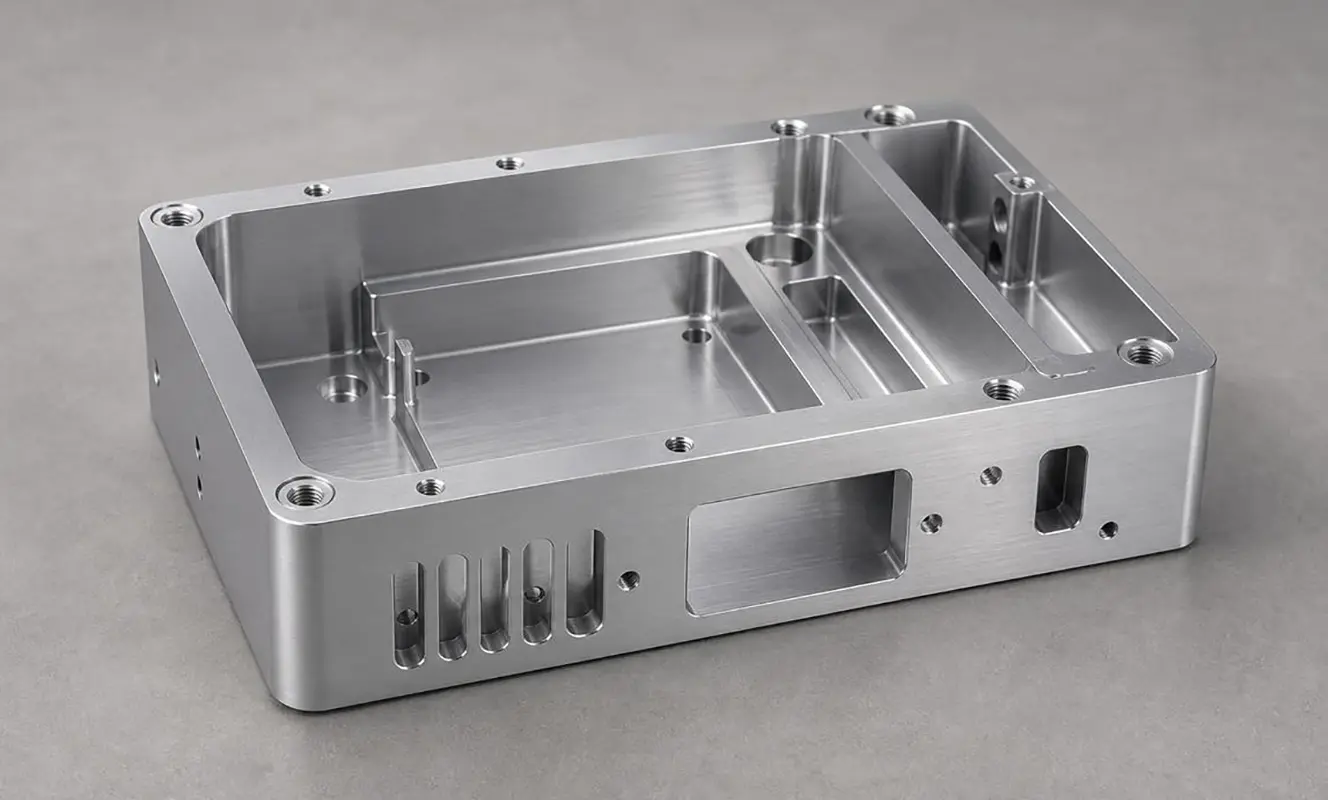
However, not every CNC milling machine is suitable for every type of metal. Different materials have different hardness levels, thermal properties, cutting resistance, and machining requirements. Choosing the wrong machine configuration, cutting tool, or machining parameters can lead to excessive tool wear, poor surface finishes, dimensional inaccuracies, and unnecessary production costs.
So, what metals can a CNC milling machine process? How do you choose the right CNC milling machine for aluminum, stainless steel, brass, copper, and other metals?
In this guide, we will explore the most common metals used in CNC milling, explain their machining characteristics, and discuss the machine configurations and cutting conditions required for different applications. Whether you operate a small CNC workshop or manage a metal parts manufacturing facility, this guide will help you make more informed machining and equipment decisions.
I. What Metals Can Be Machined by a CNC Milling Machine?
A CNC milling machine for metal can process a wide range of ferrous and non-ferrous metals, making it an essential piece of equipment for modern metalworking and precision manufacturing. By using rotating cutting tools and computer-controlled movements, a CNC metal milling machine can remove material from a workpiece to create flat surfaces, slots, pockets, holes, contours, and complex 3D geometries.
However, the machinability of different metals varies considerably. Aluminum is relatively easy to cut and is suitable for high-speed machining, while stainless steel requires greater attention to cutting forces, heat generation, and work hardening. Brass offers excellent machinability for precision components, whereas copper requires careful tool selection to prevent material adhesion and chip-related problems.
Understanding these differences is important when selecting CNC milling machine materials, determining machining parameters, and choosing the right machine configuration for your production requirements.
1.Common Metals Processed by CNC Milling Machines
Most industrial CNC milling machines for metal are designed to process various metal alloys, provided that their spindle performance, structural rigidity, cutting tools, and cooling systems are suitable for the application.
The following table summarizes some of the most commonly machined metals, their key properties, and typical manufacturing applications.
| Metal Material | Machining Characteristics | Common CNC Milling Applications |
|---|---|---|
| Aluminum | Lightweight, good machinability, relatively low cutting resistance | Aluminum housings, brackets, automotive parts, heat sinks |
| Carbon Steel | Good mechanical strength, machinability varies with carbon content | Machine parts, shafts, fixtures, structural components |
| Alloy Steel | High strength, wear resistance, machining difficulty depends on alloy and heat treatment | Gears, molds, mechanical components |
| Brass | Excellent machinability, good dimensional stability | Valves, connectors, precision fittings, decorative hardware |
| Copper | Excellent electrical and thermal conductivity, relatively high ductility | Electrical terminals, connectors, heat exchangers |
| Titanium Alloys | High strength-to-weight ratio, low thermal conductivity, difficult machining | Aerospace components, medical implants, specialized industrial parts |
Among these materials, aluminum, stainless steel, carbon steel, brass, and copper are particularly common in general metalworking applications. Titanium and other difficult-to-machine alloys may require more specialized machine configurations, cutting tools, and machining strategies.
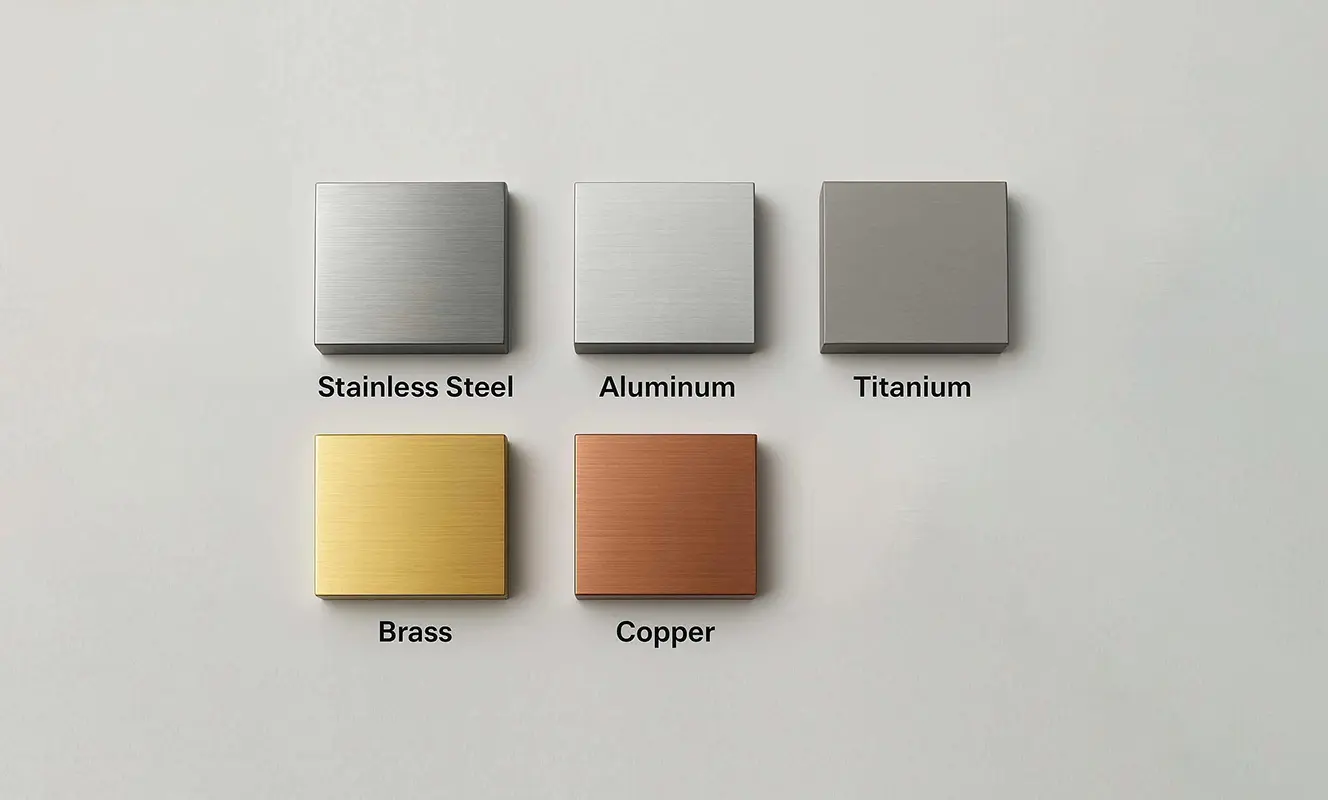
2.Ferrous Metals vs. Non-Ferrous Metals in CNC Milling
When it comes to CNC metal milling, metals are generally divided into two main groups: ferrous metals and non-ferrous metals. The main difference is their iron content, but this also affects how they behave during machining.
Ferrous metals contain iron as their primary component. Common examples include carbon steel, alloy steel, and stainless steel. These materials are widely used in industrial machinery, automotive components, structural parts, and equipment housings because of their strength and durability. However, their machining characteristics can vary considerably. Carbon steel is relatively straightforward to mill, while stainless steel tends to generate more heat and can cause greater tool wear if cutting conditions are not properly controlled.
Non-ferrous metals contain little or no iron. Aluminum, brass, copper, and titanium are common examples used in CNC milling. Aluminum is particularly popular because it is lightweight, easy to machine, and suitable for high-speed production. Brass also offers good machinability and produces clean cutting results. Copper, on the other hand, is softer but can be more challenging to machine because of its ductility and tendency to form long chips. Titanium is strong and lightweight, but its low thermal conductivity makes heat management especially important during milling.
For manufacturers, the distinction matters because different metals place different demands on the machine, cutting tools, and machining parameters. A CNC milling machine for metal should have the appropriate spindle performance, structural rigidity, and tooling configuration to handle the materials being processed. Understanding these differences helps achieve better surface finishes, more stable machining, and longer tool life.
II.CNC Milling Aluminum: High-Speed Machining for Precision Components
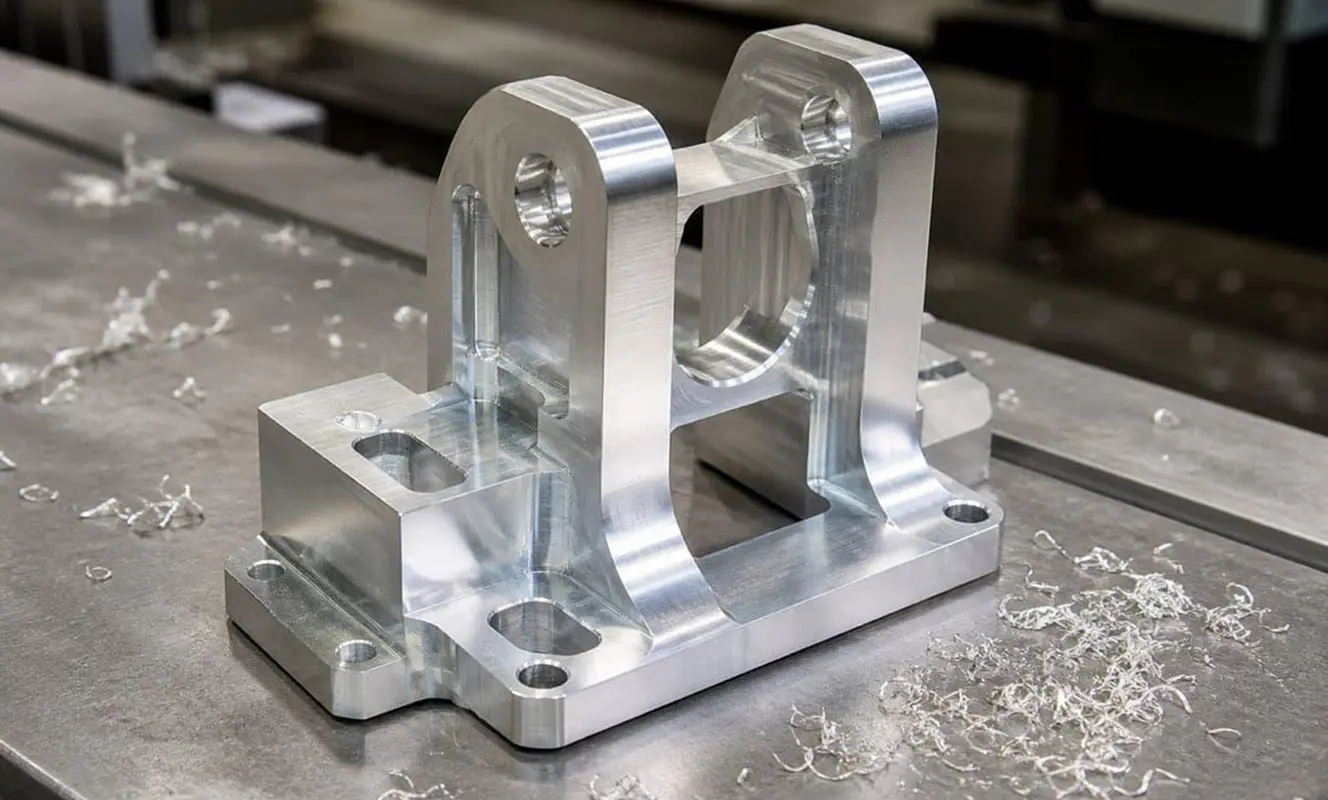
Aluminum is widely used in CNC milling because it allows relatively high material removal rates while maintaining good dimensional accuracy. It is particularly suitable for manufacturing parts with complex pockets, slots, drilled holes, curved surfaces, and thin-wall structures.
However, machining aluminum efficiently is not simply a matter of increasing spindle speed. Tool geometry, chip thickness, workpiece rigidity, and machining strategy all affect cutting performance. These factors become especially important when producing aluminum components with deep cavities or tight dimensional tolerances.
1.Which Aluminum Alloys Are Suitable for CNC Milling?
Different aluminum alloys behave differently under cutting forces. Among the many available grades, 6061, 7075, and 5052 are commonly encountered in industrial manufacturing.
- 6061 Aluminum: One of the most commonly used aluminum alloys for CNC machining. It offers a good balance of strength, machinability, and corrosion resistance. It is often used for machine parts, brackets, mounting plates, and equipment housings.
- 7075 Aluminum: Stronger and harder than 6061, making it a good choice for parts that need to withstand higher loads without adding too much weight. It is commonly used in aerospace components and high-performance mechanical parts. Because of its higher strength, cutting conditions and tool selection need more attention.
- 5052 Aluminum: Known for its excellent corrosion resistance and good formability. It is widely used in enclosures, panels, and marine equipment. Compared with 6061, it is more ductile, which means burr formation can be more noticeable during milling.
2. Practical Challenges in CNC Milling Aluminum
1) Tool Selection: Why Two- or Three-Flute End Mills Are Commonly Used
Aluminum tends to produce relatively large, continuous chips. If the flute space is too small, chips can become trapped between the tool and workpiece, particularly during slotting and deep-pocket milling. three- and four-flute carbide end mills are widely used because they offer a good balance between cutting efficiency, chip evacuation, and surface finish. Polished flutes and sharp cutting edges also help reduce aluminum adhesion on the tool.
- Three-Flute End Mills: Commonly used for aluminum milling. Their larger flute spaces allow chips to escape more easily, making them suitable for high-speed cutting, slot milling, and pocket machining.
- Four-Flute End Mills: Frequently used for stainless steel, carbon steel, and other steel materials. The additional cutting edges provide good cutting stability and surface finish, particularly during side milling and finishing operations.
When selecting an end mill, also consider its diameter, flute geometry, coating, and cutting length. For deep pockets or slots, chip evacuation is especially important. Using a cutter with too many flutes can restrict chip space and increase the risk of chip accumulation.
2) Deep Pocket Milling: Preventing Chips from Being Cut Repeatedly
Deep pockets are common in aluminum housings, mechanical components, and equipment frames. During machining, chips can accumulate at the bottom of the cavity. If the cutter passes through these chips repeatedly, the cutting edge may wear faster and the finished surface may develop scratches.
A better approach is to use an appropriate roughing strategy, such as adaptive milling, which maintains more consistent tool engagement instead of forcing the cutter to remove material across its full width at every pass.
For deep cavities, manufacturers should also consider:
- Using air blast or coolant to remove chips from the cutting zone.
- Selecting a tool with sufficient flute length without making it unnecessarily long.
- Dividing deep cuts into multiple axial passes.
- Checking whether the machine has enough Z-axis clearance for the tool and workpiece.
These details directly affect machining stability, tool life, and production efficiency.
3) Thin-Wall Milling: Controlling Vibration and Dimensional Deviation
Thin-walled aluminum parts are particularly sensitive to cutting forces. For example, when milling an aluminum enclosure with a wall thickness of only a few millimeters, the wall may deflect under tool pressure. Even if the machining program follows the correct dimensions, the finished part may spring back after the cutting force is removed.
To reduce this problem, manufacturers can:
- Leave a finishing allowance during rough machining rather than bringing the wall to its final thickness immediately.
- Use a light finishing pass to remove the remaining material.
- Reduce tool overhang to improve cutting rigidity.
- Use suitable fixtures or additional support to prevent the workpiece from vibrating.
- Machine opposing walls in a balanced sequence where the part geometry allows it.
For thin-wall components, the fixture design and machining sequence can have a greater influence on accuracy than simply increasing spindle power.
4) Surface Finish: Why Roughing and Finishing Should Be Separated
When producing aluminum parts with visible surfaces or close dimensional tolerances, using the same machining strategy for roughing and finishing may not deliver consistent results.
Roughing focuses on removing material efficiently, while finishing focuses on dimensional accuracy and surface quality. A practical process is to remove most of the excess material during roughing, leave a controlled finishing allowance, and then use a sharp cutter with suitable cutting conditions to achieve the final dimensions.
III. CNC Milling Stainless Steel
Stainless steel is widely used in industries where strength, corrosion resistance, and long-term durability are important. It is commonly found in food processing equipment, medical devices, chemical machinery, automotive components, and industrial fittings.
Unlike aluminum, stainless steel is generally harder to machine. It has relatively low thermal conductivity, which means much of the heat generated during cutting stays near the cutting edge rather than spreading quickly through the workpiece. Some stainless steel grades also become harder in the machined area, a phenomenon known as work hardening.
These characteristics make CNC milling stainless steel more demanding in terms of cutting tools, machining parameters, and machine rigidity.
1.Common Stainless Steel Grades Used in CNC Milling
Different stainless steel grades have different mechanical properties and machining characteristics. The most commonly encountered grades include:
- 304 Stainless Steel: One of the most widely used stainless steel grades. It offers good corrosion resistance and is found in food processing equipment, tanks, fittings, and general industrial components. However, its tendency to work harden makes proper cutting conditions important.
- 316 Stainless Steel: Provides better resistance to chlorides and many corrosive environments than 304. It is commonly used in marine equipment, chemical processing components, and equipment exposed to harsh environments. Its machining characteristics are similar to 304, but cutting forces and tool wear still need careful management.
- 410 Stainless Steel: A martensitic stainless steel that can be heat-treated to achieve higher hardness and strength. It is used for shafts, valves, fasteners, and mechanical components. Its machining difficulty depends heavily on the material's heat treatment and hardness.
- 430 Stainless Steel: A ferritic stainless steel with good corrosion resistance in many indoor and mildly corrosive environments. It is used in appliance components, decorative panels, and automotive trim. Its machining behavior differs from austenitic grades such as 304 and 316.
For general industrial applications, 304 and 316 are common choices. However, when machining stainless steel, the exact grade and material condition matter. Heat-treated or hardened stainless steel may require different tools and cutting conditions.
2.What Should You Look for in a CNC Milling Machine for Stainless Steel?
Stainless steel puts more demands on a milling machine than aluminum. Higher cutting forces, heat buildup, and tool wear can affect machining efficiency, especially when producing parts with deep pockets, slots, or complex profiles. If stainless steel is a regular part of your production, several machine features deserve attention.
1) Spindle Power and Torque
Stainless steel generally requires more cutting force than aluminum. When using larger-diameter cutters or removing a significant amount of material, the spindle needs enough torque to maintain stable cutting performance. Don't focus only on the maximum spindle speed. Check the spindle's power and torque output across its working speed range.
2) Machine Frame Rigidity
A rigid machine structure helps withstand cutting forces and reduces vibration during milling. This is particularly important when machining 304 or 316 stainless steel, where unstable cutting can lead to poor surface finishes, dimensional deviations, and premature tool wear. The frame, linear guides, spindle assembly, and worktable all contribute to overall machining stability.
3) Coolant Delivery and Chip Removal
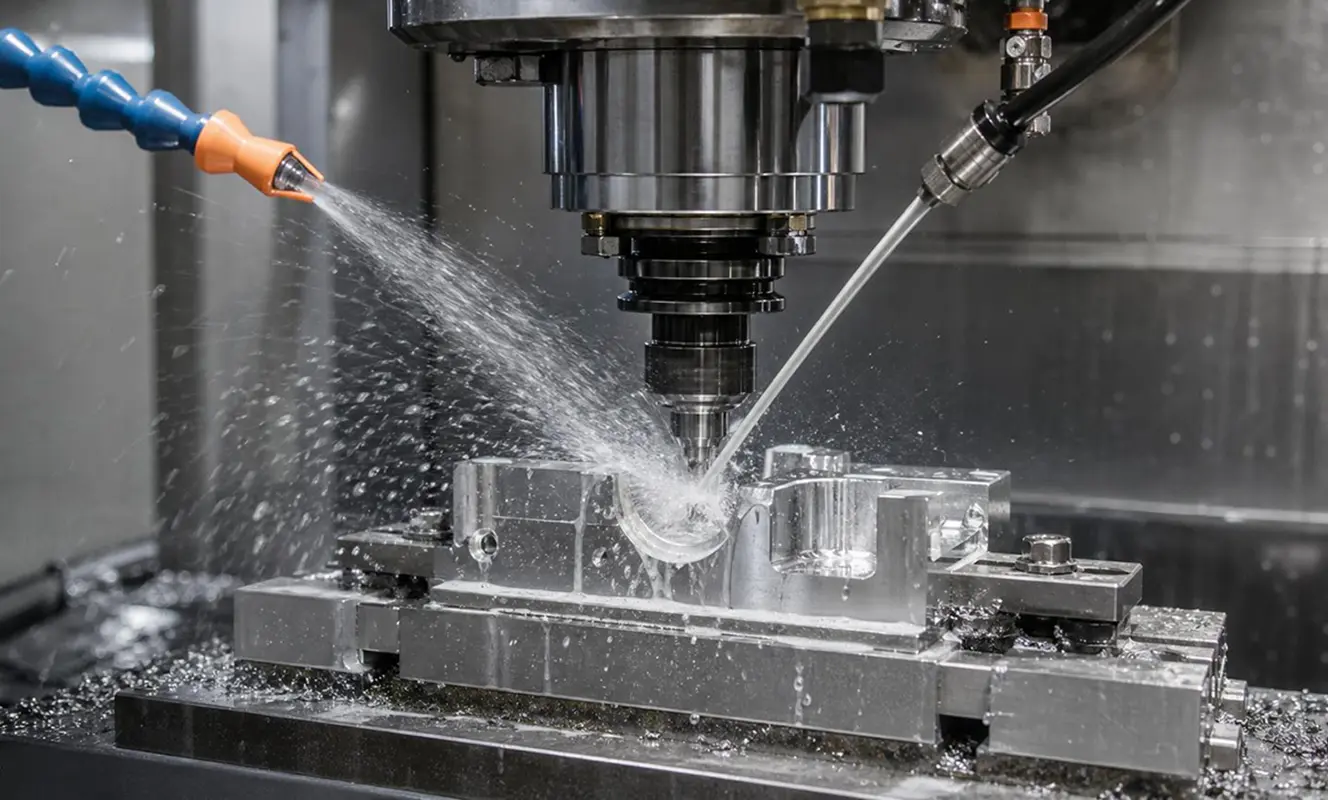
Because stainless steel retains more cutting heat around the tool-workpiece contact area, an effective coolant system is important for many milling operations. Coolant helps control temperature, lubricate the cutting zone, and flush chips away. For deep pockets and enclosed machining areas, coolant delivery and chip evacuation deserve particular attention.
4) Tool Holding and Clamping Stability
Tool runout and vibration can shorten tool life and affect machining accuracy. A reliable tool holder helps keep the cutter securely positioned, while proper workpiece clamping prevents movement under cutting forces. For precision stainless steel components, these details can make a noticeable difference in machining consistency.
5) Suitable Cutting Tools and Machining Configuration
Stainless steel machining commonly uses carbide cutting tools with suitable geometries and coatings. The machine should be compatible with the tool holders, cutter diameters, and machining operations required by your production. If you frequently switch between different stainless steel parts, an automatic tool changer can also help reduce manual tool changes and improve production efficiency.
Ultimately, the right CNC milling machine for stainless steel is not necessarily the one with the highest spindle speed or power rating. It should provide enough torque, rigidity, cooling capacity, and machining stability for the specific stainless steel grades and component sizes you work with.
IV. CNC Milling Brass and Pure Copper: Machining Non-Ferrous Metals
Brass and pure copper are commonly used in CNC machining, particularly for electrical components, plumbing fittings, industrial equipment, and heat transfer parts. Both are copper-based materials, but their machining characteristics are quite different.
Brass is an alloy of copper and zinc. It is generally easy to machine and produces a good surface finish, making it suitable for precision parts and high-volume production. Pure copper, on the other hand, is softer and more ductile. It offers excellent electrical and thermal conductivity but can be more difficult to mill because it tends to stick to cutting tools and produce long chips.
1.Brass: Easy Machining for Precision Components
Brass is one of the more machinable non-ferrous metals. Many brass grades can be milled at relatively high cutting speeds, with less cutting resistance than steel. Free-machining brass, such as C36000, is particularly popular because it produces short chips and allows efficient material removal.
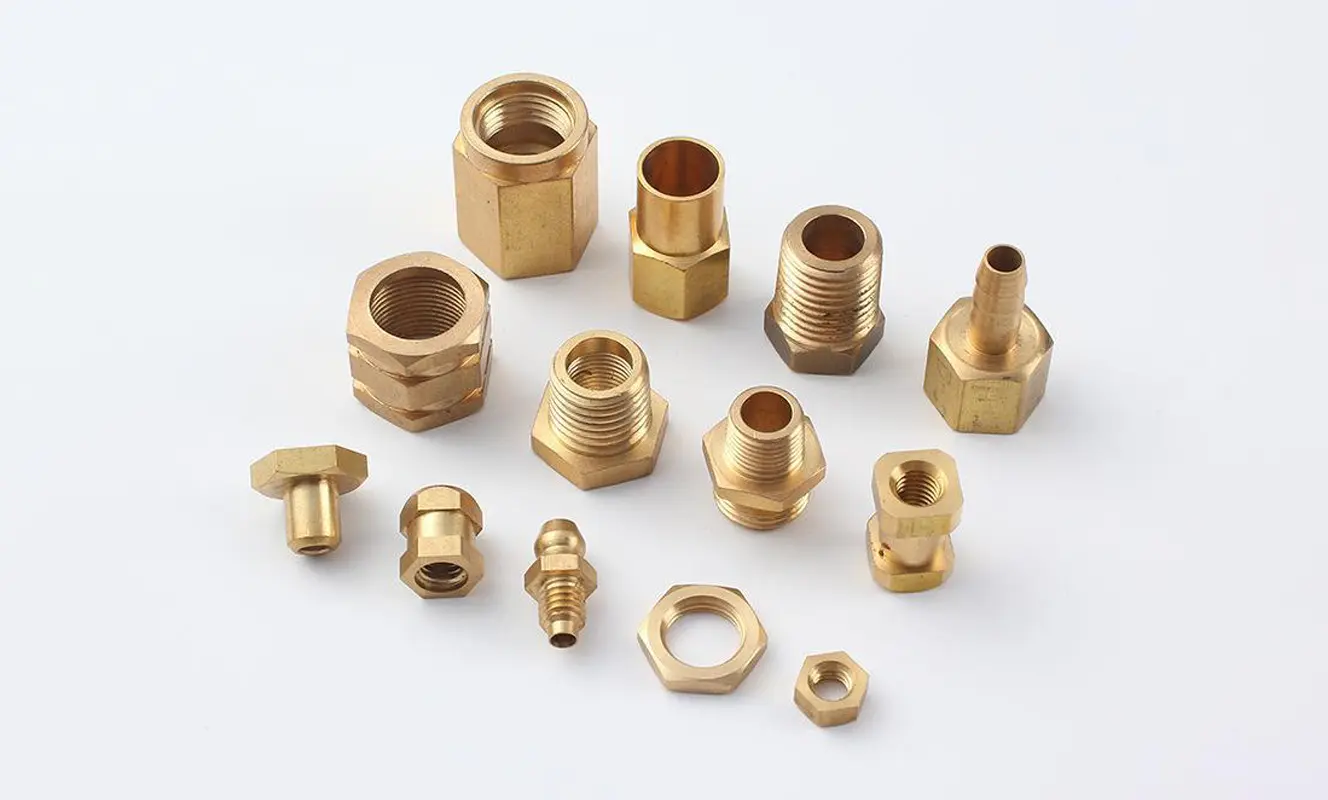
Common CNC-milled brass components include:
- Plumbing fittings and valves: Threaded connectors, valve bodies, and pipe fittings.
- Electrical components: Terminals, connectors, and conductive fittings.
- Precision mechanical parts: Small gears, bushings, fasteners, and instrument components.
- Decorative hardware: Handles, knobs, and precision-machined fittings.
2.Pure Copper: Precision Machining for Electrical and Thermal Components
Pure copper, also known as red copper, is valued for its excellent electrical and thermal conductivity. C11000 electrolytic tough pitch (ETP) copper is a commonly used commercial grade for electrical and industrial applications.
Unlike brass, pure copper is soft and highly ductile. During CNC milling, it can stick to the cutting edge, form long continuous chips, and develop burrs around machined edges. These characteristics make tool selection and chip removal particularly important.
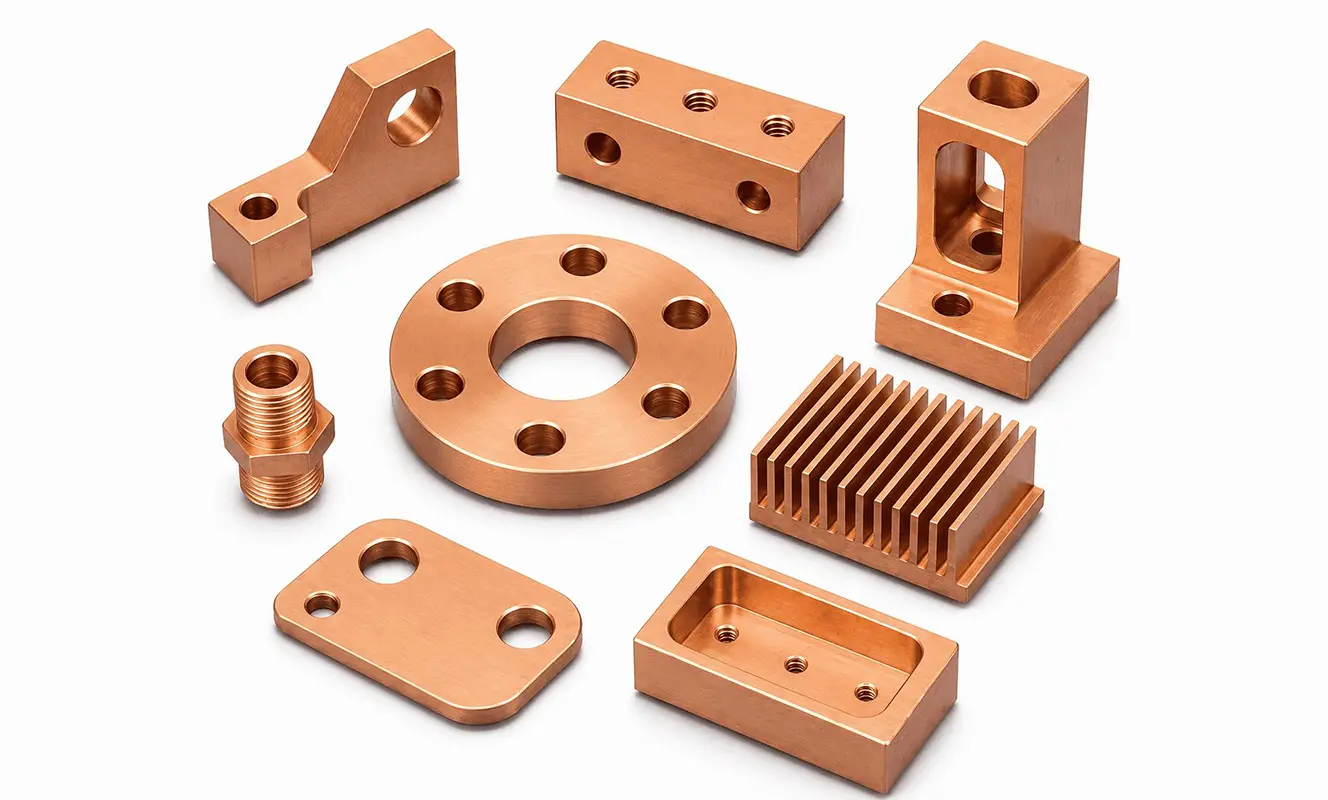
Typical applications include:
- Electrical busbars: Used in power distribution systems because of their high electrical conductivity.
- Copper connectors: Used in electrical equipment, switchgear, and power transmission systems.
- Heat sinks and cooling plates: Take advantage of copper's excellent thermal conductivity.
- Heat exchanger components: Used in thermal management and industrial cooling equipment.
3.What Should You Consider When Milling Brass and Pure Copper?
Although both materials are relatively easy to cut compared with many steels, they require different machining approaches.
1) Choose Cutting Tools According to the Material
Brass generally machines well with sharp carbide tools or suitable tools designed for non-ferrous metals. For pure copper, polished cutting edges and appropriate flute geometry help reduce material adhesion.
2) Pay Attention to Chip Removal
Brass, particularly free-machining grades such as C36000, usually produces shorter and more manageable chips. Pure copper is more likely to generate long, continuous chips that can wrap around the cutter or accumulate inside pockets. Air blast or suitable coolant delivery can help clear the cutting area.
3) Control Workpiece Clamping Pressure
Pure copper is relatively soft, so excessive clamping pressure may leave marks or deform thin plates and components. This is particularly important when machining copper busbars, thin connectors, and cooling plates. Use appropriate fixtures to hold the workpiece securely without applying unnecessary pressure.
4) Maintain Stable Machining Conditions
Brass generally supports efficient high-speed machining. Pure copper requires more attention to tool sharpness, cutting conditions, and chip evacuation. Avoiding tool rubbing and maintaining consistent cutting engagement can help improve surface quality and reduce burr formation.
V.CNC Milling Carbon Steel and Alloy Steel
Carbon steel and alloy steel are widely used in CNC milling to produce components that require high strength, toughness, and wear resistance. Common applications include shafts, gears, machine parts, automotive components, and heavy equipment parts.
- Carbon Steel (AISI 1018, 1045): 1018 is relatively easy to machine and commonly used for shafts, brackets, and plates. 1045 offers higher strength and is often used for gears and mechanical components.
- Alloy Steel (AISI 4140, 4340): These steels contain additional alloying elements to improve strength, toughness, and wear resistance. They are commonly used for heavy-duty shafts, gears, and industrial machine parts.
Compared with aluminum, steel generally requires greater cutting forces and puts more demands on machine rigidity and spindle torque. For regular steel machining, choose a CNC milling machine for metal with a rigid structure, sufficient spindle power, and reliable cooling capabilities. If you also process hardened steel, make sure the machine and tooling are suitable for the required hardness and cutting conditions.
VI. CNC Milling Titanium
Titanium is widely used in aerospace, medical equipment, automotive engineering, and high-performance industrial applications. Its high strength-to-weight ratio and excellent corrosion resistance make it valuable for components that need to remain strong without adding excessive weight.
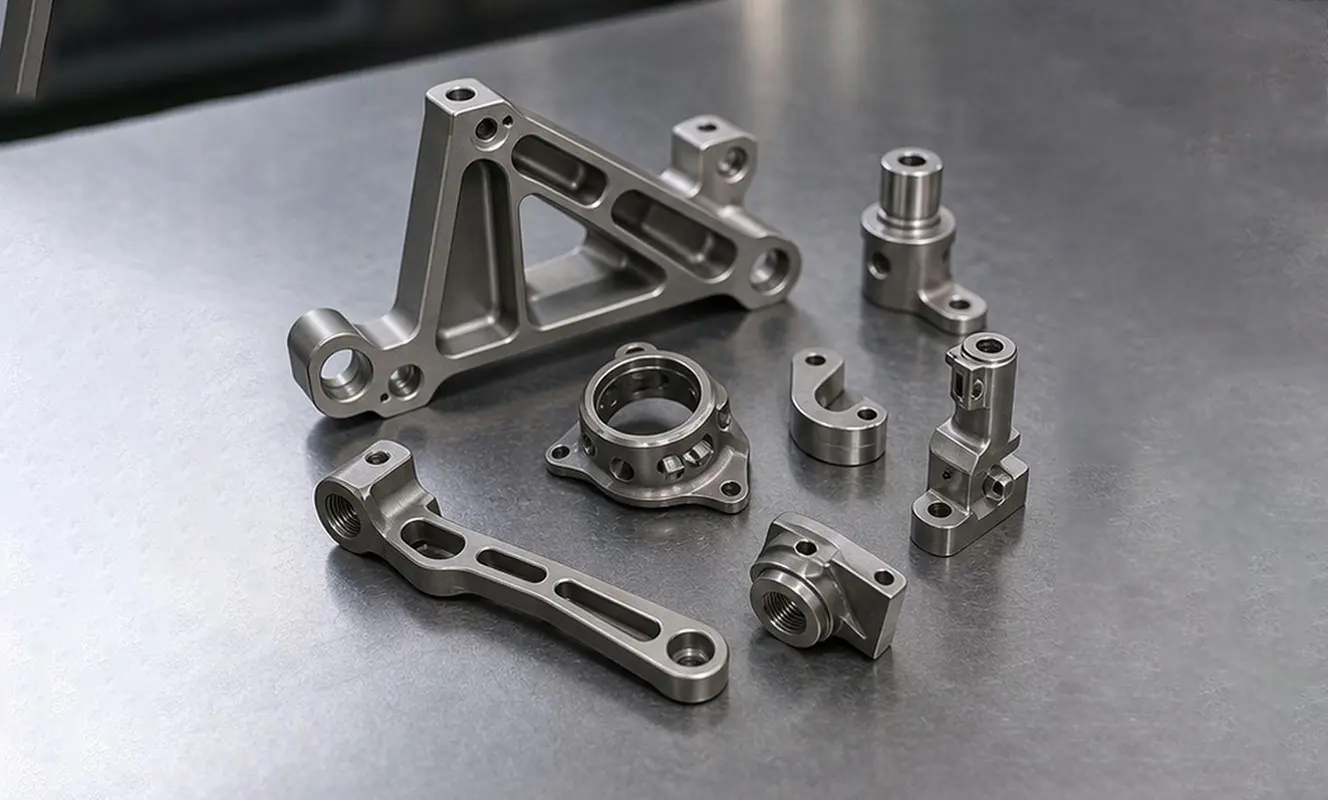
However, CNC milling titanium is more demanding than machining aluminum or ordinary steel. Titanium has low thermal conductivity, so heat tends to concentrate around the cutting edge. It also maintains high strength at elevated temperatures, which can accelerate tool wear during milling.
- Grade 2 Titanium: Commercially pure titanium with good corrosion resistance and formability. It is commonly used for chemical equipment, heat exchangers, and industrial components.
- Grade 5 Titanium (Ti-6Al-4V): One of the most widely used titanium alloys. It offers high strength, low weight, and good fatigue resistance, making it popular in aerospace, medical implants, and high-performance mechanical parts.
When choosing a CNC milling machine for metal, titanium processing requires particular attention to spindle torque, structural rigidity, and coolant delivery. A high spindle speed alone is not enough. The machine must maintain stable cutting performance under sustained loads while providing effective cooling.
VII.How to Choose the Right CNC Milling Machine for Metal
Choosing a CNC milling machine for metal depends on more than the material itself. Workpiece dimensions, machining complexity, required accuracy, and production volume all affect which machine configuration is suitable. Here are several points worth considering before making a purchase.
1.Match the Machine to Your Metal Machining Requirements
Different metals require different levels of cutting force and machining stability. Aluminum, brass, and copper parts can often be processed with compact CNC metal milling machines equipped with suitable high-speed spindles. For stainless steel and alloy steel, machine rigidity, spindle torque, and cooling capacity become more important.
For manufacturers mainly processing small and medium-sized metal components, a compact CNC metal milling machine with an automatic tool changer can be a practical choice. CATEKCNC offers both semi-enclosed and fully enclosed configurations, with different spindle power options to suit various machining requirements.
2.Consider Whether You Need Automatic Tool Changing
If a part requires several operations, such as milling, drilling, tapping, and chamfering, changing tools manually can slow down production.
An ATC CNC metal milling machine automatically switches between different cutting tools according to the machining program. This reduces manual intervention and helps maintain a more consistent production process.
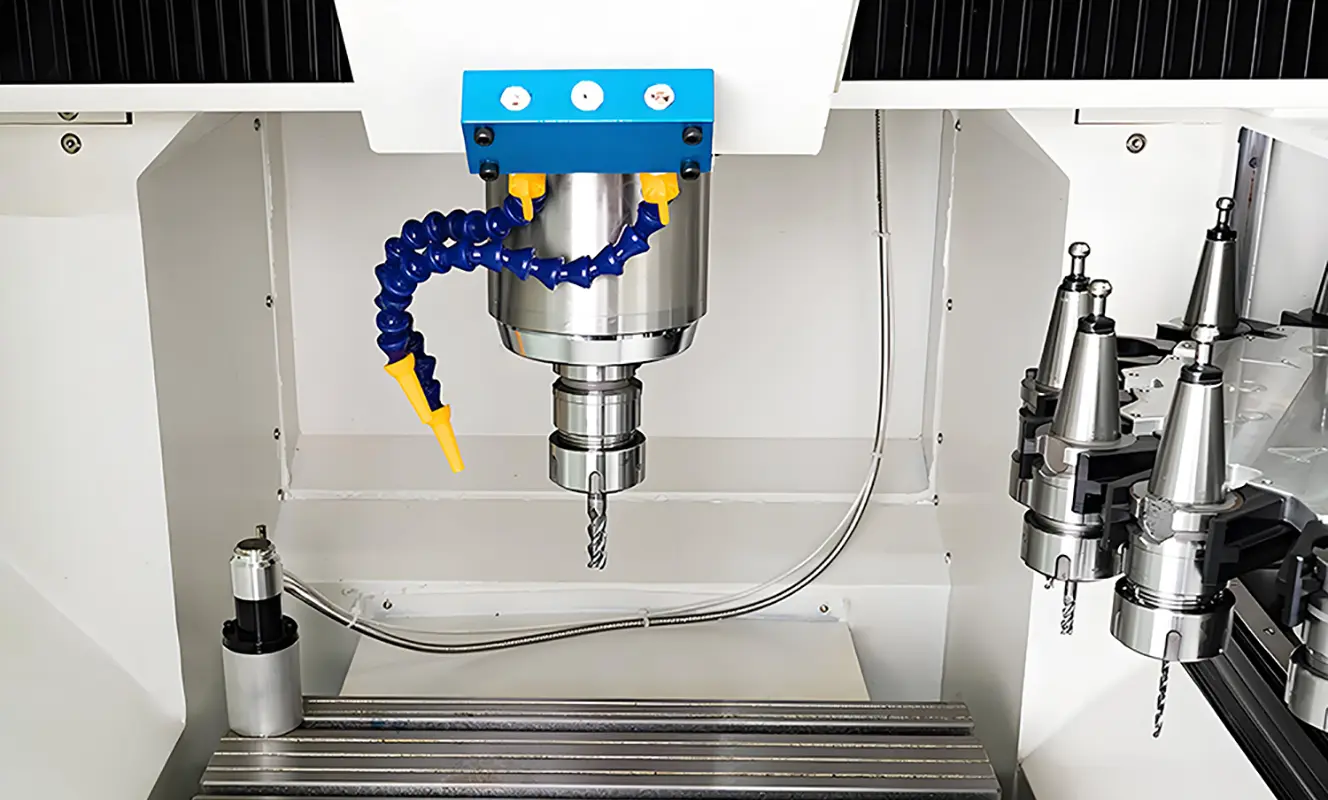
For more complex machining tasks, a vertical metal machining center with an arm-type automatic tool changer is worth considering. Depending on the configuration, it can accommodate multiple tools and perform operations such as milling, drilling, tapping, boring, and reaming in one setup.
3.Choose 5-Axis Machining for Complex Metal Components
A standard 3-axis CNC milling machine works well for flat surfaces, holes, slots, and pockets. However, components with angled surfaces, curved profiles, or features on multiple sides may require repeated repositioning.
A 5-axis CNC milling machine can approach the workpiece from different angles, reducing the need for multiple setups. This is particularly useful for machining complex 3D components, precision mold parts, curved surfaces, and specially shaped metal products.
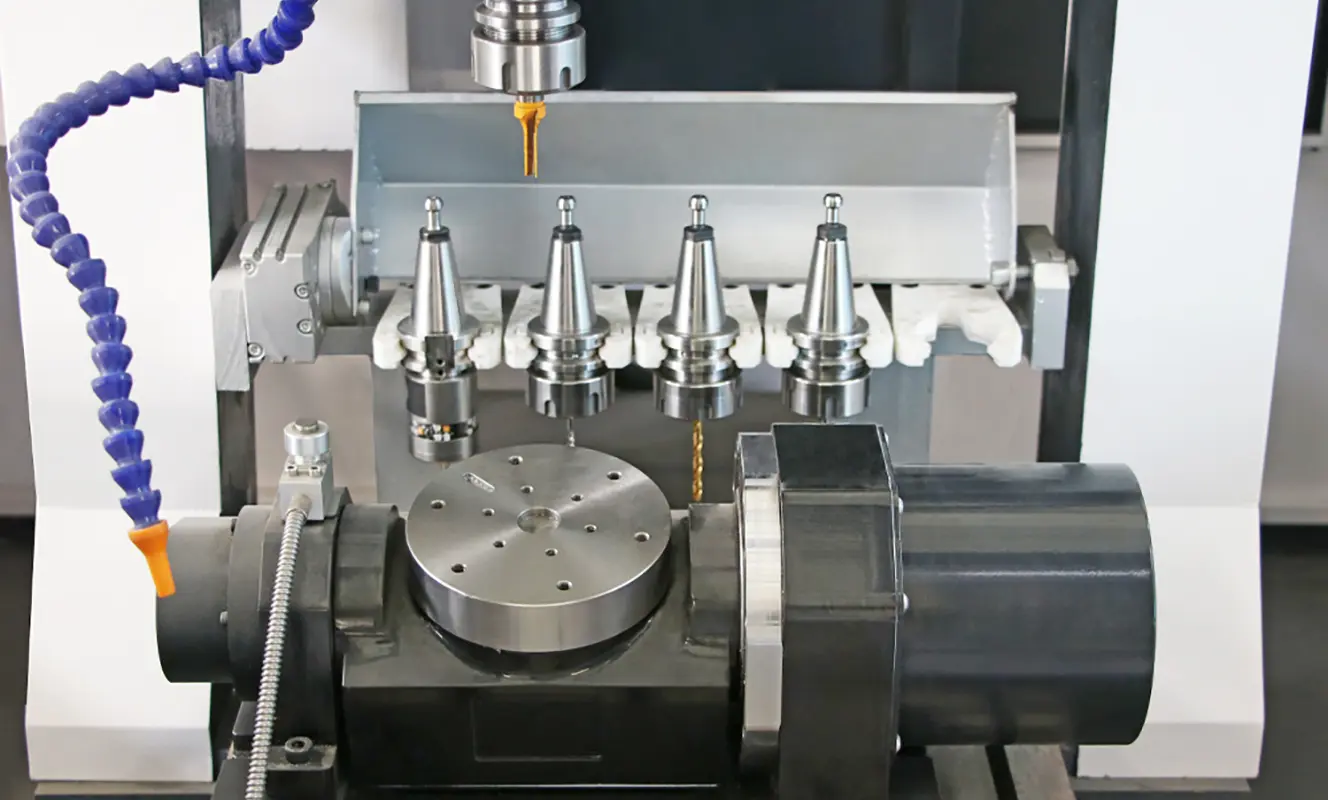
For manufacturers who regularly process complex geometries, CATEKCNC's trunnion-type 5-axis metal milling machine provides a solution for multi-angle machining. An automatic tool changer and probing system can further improve machining flexibility and positioning efficiency.
4.Check the Working Area and Machining Accuracy
The machine's working area should accommodate your largest workpieces, fixtures, and required tool movements. Also consider the weight of the workpiece, as the worktable and machine structure must provide sufficient support during machining.
Accuracy is another important factor, especially for parts with tight tolerances or multiple mating surfaces. Look beyond the advertised positioning accuracy and consider spindle quality, machine rigidity, tool holding, and workpiece clamping. These factors all influence the final machining result.
5.Consider Production Volume and Future Requirements
For small-batch production and custom metal parts, machining flexibility may be the main priority. For larger production runs, automatic tool changing, efficient chip removal, and stable continuous operation become more important.
It's also worth considering whether your future orders may involve larger workpieces or more complex machining operations. Choosing a machine with suitable capacity and configuration can help avoid unnecessary equipment upgrades later.
Before purchasing a CNC milling machine for metal, prepare representative workpiece drawings or samples. Details such as material type, dimensions, machining processes, and required accuracy will help determine the most suitable machine configuration.
VIII.Frequently Asked Questions About CNC Milling Metal
1. Can a CNC Milling Machine Cut Metal Without Coolant?
Yes, some metal milling operations can be performed without coolant, particularly light cutting or certain aluminum machining tasks. However, dry machining is not suitable for every material or operation.
When milling stainless steel, titanium, or other heat-sensitive materials, coolant can help control cutting temperatures, reduce friction, and improve tool life. The decision depends on the material, cutting tool, machining speed, and depth of cut.
2.What Is the Difference Between CNC Milling and CNC Turning for Metal?
The main difference is how the material and cutting tool move.
In CNC milling, the cutting tool rotates while the workpiece is held stationary or moves along the machine axes. It is suitable for producing slots, pockets, holes, flat surfaces, and complex profiles.
In CNC turning, the workpiece rotates while a stationary cutting tool removes material. It is mainly used for cylindrical components such as shafts, pins, bushings, and threaded parts.
Some manufacturers use both processes to complete different features of the same component.
3. Can a CNC Milling Machine Produce Threads in Metal?
Yes. CNC milling machines can produce internal and external threads using thread milling cutters. This method is particularly useful for producing threads in larger holes, hard-to-machine materials, or components requiring precise thread dimensions.
Compared with conventional tapping, thread milling offers greater flexibility because the same cutter can produce different thread diameters within its compatible range. It also allows damaged threads to be repaired in some applications.
4.How Do You Prevent Burrs When CNC Milling Metal?
Burrs commonly form along the edges of machined features, especially when cutting ductile metals such as aluminum and pure copper. Several methods can help reduce them:
- Use sharp cutting tools with suitable edge geometry.
- Optimize feed rate and cutting parameters.
- Avoid excessive tool wear.
- Add a chamfering or deburring operation after milling.
- Use appropriate finishing strategies to improve edge quality.
For precision components, deburring should be considered as part of the overall machining process rather than an afterthought.
IX.Conclusion
A CNC milling machine can process a wide range of metals, including aluminum, stainless steel, brass, pure copper, carbon steel, alloy steel, and titanium. However, each material has different machining characteristics, so cutting tools, machining parameters, and machine configurations need to be matched to the job.
When choosing a CNC milling machine for metal, consider not only the materials you process but also your workpiece dimensions, machining complexity, accuracy requirements, and production volume.
At CATEKCNC, we offer different CNC metal milling machine configurations, including compact metal milling machines, ATC CNC machines, vertical machining centers, and 5-axis milling machines. Whether you are machining aluminum components or producing more complex metal parts, we can help you find a suitable solution.
RELATED MODELS
We recommend some related models for you...
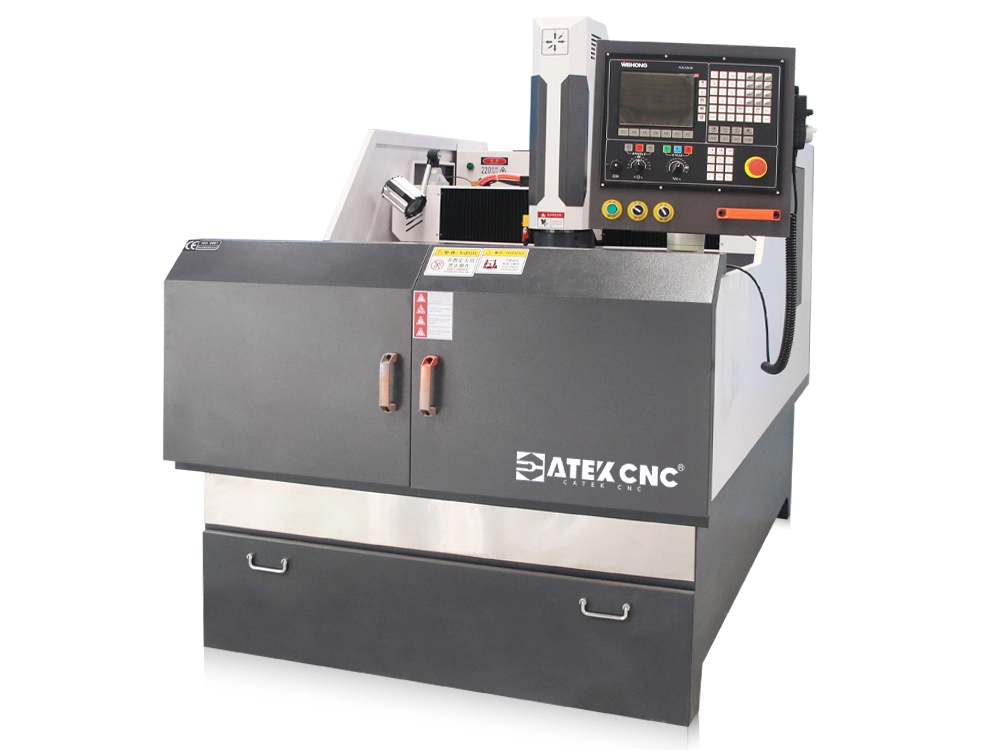
This is a CNC metal milling machine with a maximum machining dimension of 600*900*250mm. The machine features an automatic tool-changing function, equipped with a compact linear tool magazine capable of holding five tools and an automatic tool-setting function, enabling on-demand automatic tool changes during machining. The cooling system adopts an flood coolant, automatically spraying coolant onto the machining area to reduce tool and workpiece temperatures. In terms of appearance, the machine ...
$5,680.00~$7,570.00
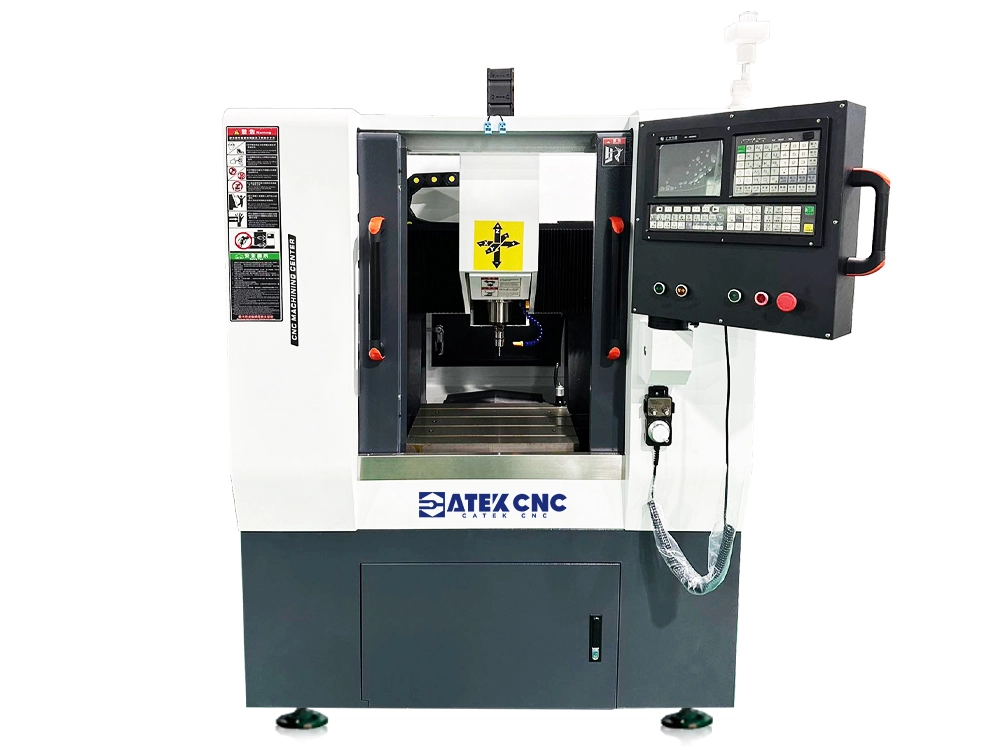
This is a vertical CNC milling machine used for metal milling. It is equipped with a fully enclosed shell, a fully automatic cutting fluid spraying and filtering system, a lubrication system, an automatic tool changer, an automatic tool setting device, etc. It is inexpensive and can be used for processing various metal parts.
$9,700.00~$14,000.00
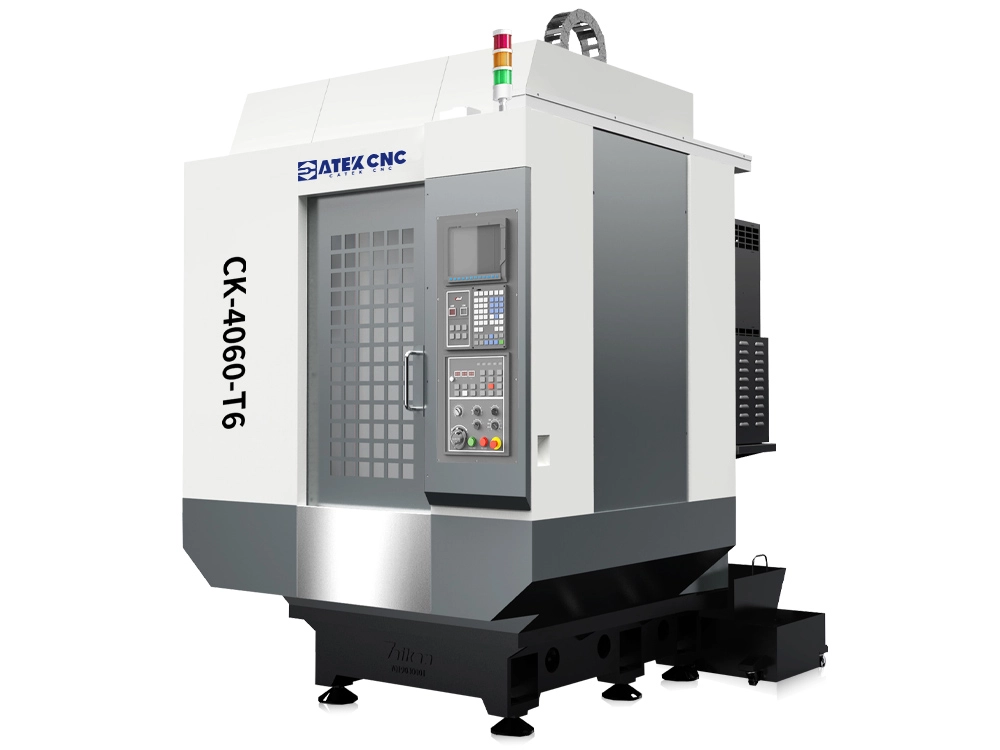
The multifunctional vertical machining center is a CNC equipment with metal milling, drilling, tapping and other processing capabilities. It has an automatic tool changing function and can install up to 21 tools. The tools can be automatically replaced during the processing process. It is widely used in various metal parts processing and mold manufacturing.
$16,800.00~$35,600.00
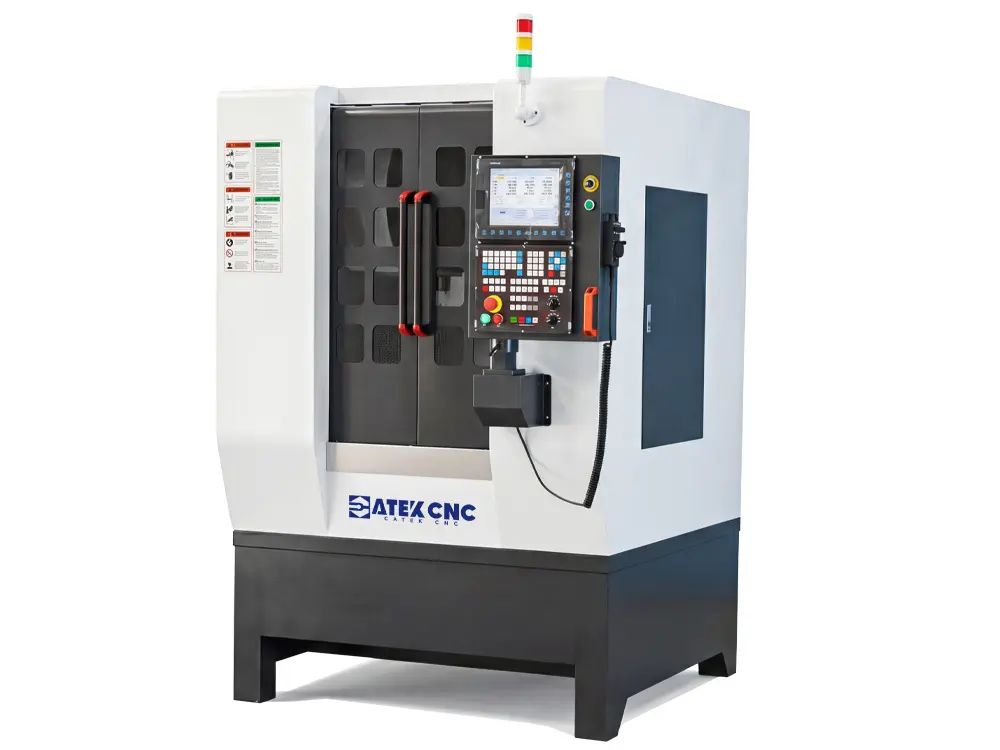
This is a 5-axis CNC metal milling machine designed with a trunnion-type (cradle-type) 5-axis configuration, where the three linear axes work in coordination with the A-axis and C-axis to enable machining from any angle on all faces of a workpiece. Equipped with an infrared touch probe, the machine rapidly performs workpiece positioning, and machining accuracy verification, ensuring machining precision and efficiency. It also comes with an automatic tool changer (ATC) kit, which allows on-demand...
$16,800.00~$27,800.00

CK-300-M30 is a CNC external whirling machine specially designed for external thread machining. The machine adopts a side-mounted external cutter head structure, machining the workpiece through the combination of low-speed workpiece rotation, high-speed cutter head rotation, and synchronized axial feed motion. During the machining process, multiple cutting inserts engage in cutting sequentially, which significantly improves machining efficiency while reducing heat accumulation caused by continuo...
$31,800.00~$65,800.00